The hobo who told me my fly was down on Ste Catherine by le Faubourg.
He approached my brother and I asking for a cigarette. I don't smoke or carry cigarettes, so I wasn't much help. He told me that my fly was down. It was, down; and then, so was I, spiritually. We started walking, and he told me that if I wanted to I could come work for him anytime I wanted.
I'm weighing the option. The trouble is I always thought hoboes got to be their own boss. I don't like the idea of tramping on assignment. It sounds like a heartless Journal de Montréal exposé.
I just learned that "Deutschland, Deutschland über alles" IST not in fact the first words of the current German national anthem. Aparently some controversy over the words (which translate to "Germany, Germany above all/everything!"), cause some to beleive they were a tad too nationalistic.
German nationalism? What harm could that do?
In any case, West Germany opted to use only the milder, less offensive third verse in 1952, and in superficially researching this a little furher, I found this editorial from a German paper.
As you will see if you follow the link, Joseph Haydn wrote the tune forty years before August Heinrich Hoffmann von Fallersleben stepped up the jingo lingo while exiled in England of all places and nearly ninety years before the Nazi's put it into practice.
Like the modern soccer hooligan Germans mentioned the article, I genuinely love the tune, but humbly suggest that anyone uncomfortable with the uncomfortable history attached to it give a listen to Noel Coward's London Pride or Elvis Costello's Little Atoms, which both make use of a melody similar to Hadyn's in interesting ways.
Coward's song, true to the sweepingly fey chariacature of British homo-masculinity that he so deftly mastered, re-writes the tune about a flower which can grow just about anywhere in the heart of London. Coward wrote it during the London Blitz, whilst huddled in the Underground amazed at the resiliance of the British public. According to Coward:
London Pride was written in the spring of 1941. I was standing on the platform of a London railway station on the morning after a bad blitz. Most of the glass in the station roof had been blown out and there was dust in the air and the smell of burning.
The train I was waiting to meet was running late and so I sat on a platform seat and watched the Londoners scurrying about in the spring sunshine. They all seemed to me to be gay and determined and wholly admirable, and for a moment or two I was overwhelmed by a wave of sentimental pride. The song started in my head then and there, and was finished in a couple of days.
The tune is based on the traditional lavender-seller’s song, "Won't You Buy My Sweet-Smelling Lavender, There Are Sixteen Bunches One Penny". This age-old melody was appropriated by the Germans and used as a foundation for "Deutschland Uber Alles", and I considered that the time had come for us to have it back in London where it belonged. I am proud of the words of this song. They express what I felt at the time, i.e. London Pride.
(Coward wartime stuff is amazingly complex for being so sentimental, listen also to his 1943 song Don't Let's Beastly to the Germans ).
Interestingly, Elvis Costello's song begins with similarily flowery allusions ("I arose and Marigold lay down with Curious Iris / Cherry gave to Victor her prudence and her virus...") only to turn further inward about how the first-person speaker of the song "betray with a kiss," "the particles of me that care for this."
Which bring me to my main point and the reason I'm putting this up: the author of the above article does not mention the myriad of permutations of the tune, which begs more pressing questions about ownership and property, which are the very systems of thought underlying the problem of nationalism in the first place. Which seems especially pertinent to music with the recent wave of legal action being undertaken in the name of copyrights against file sharing sites like Oink and Demonoid. Music is like the flowers, man--it belongs to everybody! Anyway.
Here's Little Atoms, maybe (they might pull it down)
It has been a bizarre but uneventful MASH-tober. The challenge persists, but yields little. Last night, it was warmer so I left the windows open and over the strains of "Boris"' mashing, I heard my downstairs neighbours living and boozing it up into the wee small horas. The alley often sports broken bottles hurled there by Westmount teens or poor recyclers. Perhaps, the lag and unHalloweenliness of the season owe to climate change? In which case, as I noted last time, Monster Masher Bobby Pickett may have hoped on a much more prescient bandwagon when he turned to the Mashing Climate Change with his swan song, the Climate Mash.
Which reminded me that as I was sitting here working at the computer in front the dark alleyway between mine and the building next door, a plastic bad fell straight down, parachute-like, from on high, perfectly in my line of vision. The sky was literally raining plastic bag. It was an American Beauty moment, but it made for a dirty alleyway.
The warm air, the plastic bag, broken bottles, and the mutant squirrel... all of this reminds me of something which leads to something else:
The Vortex of Garbage in the North Pacific Ocean.
I don't remember if Al Gore told me (and 20,000 other people) about this when he spoke in Montreal in March, but it is alternately known as the Great Pacific Garbage Patch, the Eastern Garbage Patch or the Pacific Trash Vortex, but I'm partial to Vortex of Garbage. It forms around the North Pacific Gyre, which is apparently the system of currents tugging at the world's oceans. The currents in turn deposit vast amounts of garbage into the North Pacific, and this semi-buoyant trash heap is currently about the size of Texas.
What this means, I cannot be sure, but I have visions of a distopic future (there's seldom any other kind in the waking imagination) in which a Bering Straight is filled in again with trash, allowing a motley of Americans to walk back to Asia across a pile of dirty tennis shoes, Huey Lewis albums, computer monitors, discarded tubes of petroleum jelly, and other non-biodegradable remnants of human civilization. Eventually, humankind or whatever's left of it will settle the vortex, perhaps breeding Great Pacific Garbage Pale Kids and later, a system of government will evolve there after centuries of warfare for the heaps, but right now it's just a slowly swirling pile of garbage. That's terrible.
I'd like some suggestions for following up. Can anyone direct me towards:
- a cultural histories of plastic (chronicling varied cultural attitudes towards plastic from the fifties to present) - Climate Mash, where can one hear it? - Where the last 13 days went?
LISTENING CONTEXTS: varied, the most interesting being in Aunt's car
In the middle of nowhere, I was interupted by drums, and what turned out to be a re-recording of the Monster Mash. K-tel et al made the worst of these sort of things. As I mentioned, Bobby "Boris" Pickett made a career out of the Monster Mash. I remember hearing another record once on the radio about this time of year in which Boris basically sang the whole of the Monster Mash in the past tense, "still working at the lab, late that night... remember the Monster Mash?" Etc. The last thing he did is said to be the Climate Mash, having turned his attentions to the HORRORS OF GLOBAL WARMING... Haven't been able to find it anywhere. Have found Beach Boys with Bobby...
LISTENING CONTEXT: bus stop, starring up at the crest with an old Packard logo in it waiting for a bus
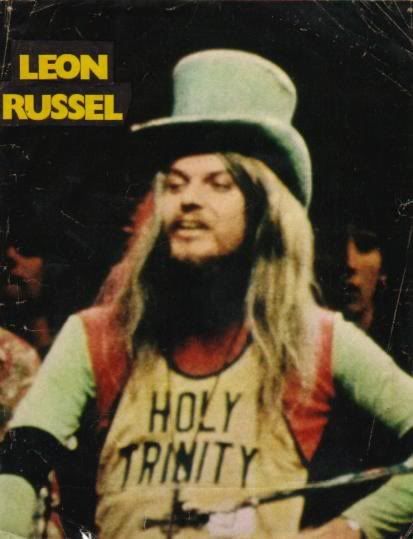
Okay, I know that yesterday I said that the Monster Mash was isolating, but here's a shocking fact: the monsters are having fun. Despite their monstrosity, and the implicit social stigma attached to that, they seem to be getting along, mashing.... At the same time, the musicians on the record genuinely seem to be having fun too--it's a party record, and it sounds like a party! There are few party records I can think of that don't--it was 1962, Lesley Gore's bad time party records came the following year, and synthesizers were several years away. Party records underline the role of sociality in pop music. The lyrics bring that home. Even if Leon Russell's piano sounds like its having it's own little party in a closet somewhere, away from the rhythm section, and everything is super compartmentalized on the recording--and parties often involved stuffing Leon Russell in a closet.
As I was listening to it, I thought about another great dance party record (and one I'd listened to a few minutes earlier): Quarter to Three by Gary US Bonds. The record sounds like a party was happening in the studio, and I think part of the genre's appeal is in conveying that sense of partiness. His New Orleans is another great example. Which, as I've been learning recently ties into the fun of actually playing music with other people. Which is a social phenomena. However, it also explains, going back to yesterday, why listening to other people's good time together can be so isolatin' when you're walking through Westmount.